Brevicepts’ expulsion from Cognomina
The Reincarnationist PapersBrevicepts’ expulsion from Cognomina is presented as both a response to a grave threat and a punishment whose justice remains uncertain. Her belief that those who remember past lives were destined to rule humanity had already contributed to deaths and the looting of the treasury; after returning, she threatened to repeat the attack. Cognomina’s members chose excommunication, but the account also dwells on what that decision meant across repeated lives: Brevicepts was left to continue reincarnating with knowledge of the community from which she had been permanently excluded.
The Crisis Behind the Expulsion
The account links Brevicepts’ removal to an earlier catastrophe. She and four others were killed, and the treasury was looted. The narrative attributes the disaster to Brevicepts, while distinguishing the damage to Cognomina’s resources from the deeper danger her conduct posed. After the group returned, she threatened to sack villages that had turned against them. Her willingness to renew the conflict made the earlier episode more than a past calamity: in the eyes of the other members, it indicated that the danger remained active.
Brevicepts’ stated justification was a claim of divine entitlement. She believed that members of Cognomina were endowed with a purpose that gave them the right to rule humanity. The account presents this conviction as the basis for her desired attacks on the villages, not simply as an abstract opinion. It also sets her ambition against the other members’ appeal that she moderate her conduct and return to a life of comfort and anonymity. Their proposed alternative was not domination under a different policy, but withdrawal from public power and a return to the discreet existence they had previously maintained.
The Unanimous Decision
The other four members eventually concluded that excommunication was the only available option. The decision had to be unanimous. That requirement made the expulsion more than an individual judgment: each of the four had to agree that Brevicepts could no longer remain within Cognomina. The account singles out the final vote as especially consequential. The elderly man seated at the center of the panel during Evan Michaels’s Ascension had to vote in favor for the decision to pass.
The reference to Evan Michaels’s Ascension connects the old disciplinary decision to a later institutional ritual. For Evan, the man is recognizable as the central figure on the panel; in the story of Brevicepts, he is also the final member whose assent made expulsion possible. The connection does not explain the full procedure or establish what role the panel ordinarily played. It does show that the decision’s unanimity depended on a specific person’s approval, and that this past judgment remained part of the community’s history when Evan underwent review.
Life Outside Cognomina
After the decision, Brevicepts left. The account says that she eventually died and was reborn repeatedly, dying and returning again. Her expulsion therefore did not end her existence or remove her from the cycle shared by Cognomina’s members. Instead, it separated her from the community while leaving her subject to the continuing pattern of death and rebirth.
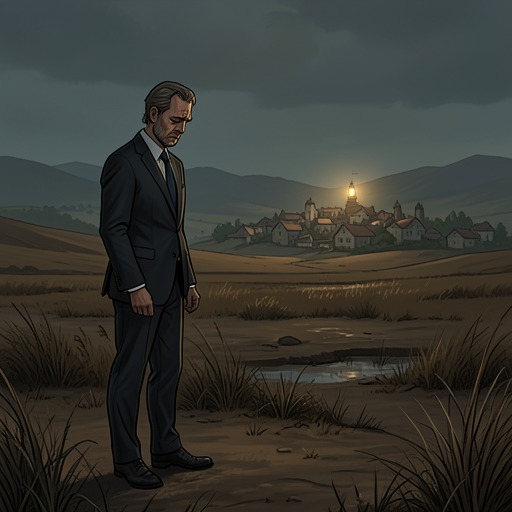
Her condition is described with an important uncertainty: she was probably alone. The speaker cannot know where she is now, only that she may still be somewhere in the world that night. What makes this separation especially severe is that Brevicepts knows about Cognomina—what its members are and where they are. The account contrasts her knowledge with Evan Michaels’s earlier unawareness. Before he was found, Evan had the relief of not knowing that such a community existed; Brevicepts, by contrast, is imagined as enduring her exclusion while fully aware of the family and place from which she has been cast out.
Justice, Remorse, and Silence
The account does not settle whether the expulsion was just. Its speaker considers two possibilities: the punishment may have been unjust, or the original four may not have told the whole story. That uncertainty complicates the earlier explanation of Brevicepts’ actions. Her conduct is described as disastrous and threatening, but the account also questions whether the surviving explanation is complete enough to justify a punishment lasting across successive lives.
The speaker’s remorse rests on the scale and nature of the separation. Cognomina is described as the only family its members can truly have, making permanent rejection more than loss of membership. The speaker imagines Brevicepts living for a thousand years as Evan had before he was found, but without his ignorance of the community. This is a comparison and an expression of horror, not a confirmed account of Brevicepts’ exact circumstances. The speaker admits being unable to comprehend what such an existence would mean and questions whether ordinary language can adequately describe it.
The affair is now generally left undiscussed. That silence preserves no clear resolution: the account offers the original members’ stated reasons, the requirement of unanimous agreement, and a later member’s doubts, but not a definitive verdict. Brevicepts’ expulsion consequently stands as both Cognomina’s response to a renewed threat and a lasting moral problem within the community. Its consequences extend beyond the moment of judgment because Brevicepts continues to return, separated from the people who might have been her family and unable to share Evan’s earlier unknowingness.